Why Debt Collectors Keep Calling You (And How to Make Them Stop)
Blog post description.
1/7/202613 min read
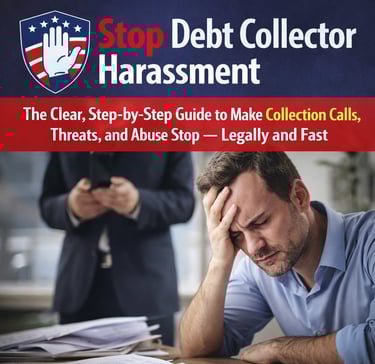
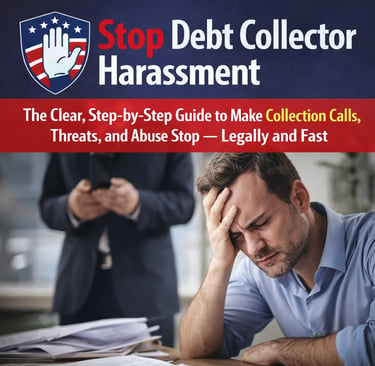
Why Debt Collectors Keep Calling You (And How to Make Them Stop)
If your phone rings multiple times a day with unfamiliar numbers, robotic voicemails, or aggressive voices demanding money, you are not alone. Millions of Americans are contacted by debt collectors every year — often for debts that are old, disputed, already paid, or not even theirs. And yet the calls keep coming.
This is not an accident. Debt collection is a massive industry built on pressure, persistence, and psychology. Collectors do not call randomly. They call because their systems believe you are likely to pay if pushed hard enough.
This article explains exactly why debt collectors keep calling you, how their systems work, what they are legally allowed to do, and the precise steps you can take to make the calls stop — permanently and lawfully.
We are not talking about vague tips or wishful thinking. We are talking about federal law, legal rights, and a proven system that works.
The Real Reason Debt Collectors Keep Calling You
Debt collectors call because they believe there is money to be extracted.
Once a creditor — such as a credit card company, medical provider, or loan servicer — decides you are unlikely to pay voluntarily, they either:
Assign your account to an in-house collection department
Or sell your debt to a third-party debt buyer for pennies on the dollar
Once that happens, your information is uploaded into automated dialer systems that run continuously.
These systems rank consumers by:
How often they answer
How recently they paid anything
Whether they’ve disputed before
Whether their credit file shows assets
Whether their number is active
If you answer even once, hang up, or say “stop calling,” that often flags your number as active and responsive — which actually causes more calls, not fewer.
To collectors, silence is resistance. Engagement is opportunity.
That is why many people notice that after they answer one call, the volume increases dramatically.
Why They Keep Calling Even If You Can’t Pay
Collectors are not interested in your financial hardship.
They are trained to push until one of three things happens:
You pay
You agree to a payment plan
You give information they can use later
Even if you tell them you are unemployed, broke, sick, or overwhelmed, they will keep calling because:
Many people eventually pay just to stop the stress
Even small payments restart the statute of limitations
Partial payments make the account more valuable
From a collector’s perspective, a person who cannot pay today might pay next week. A person who refuses to engage at all is much harder to monetize.
Why You Get Calls About Debts You Don’t Recognize
This happens constantly.
Debt buyers often purchase massive portfolios of accounts with:
Incomplete data
Outdated addresses
Wrong phone numbers
Old relatives’ information
Clerical errors
Then they blast those numbers with autodialers hoping someone responds.
If you have a similar name, shared a phone plan, or previously lived at an address linked to the debt, you may get pulled into their system.
They do not need to be sure you owe the debt to call you.
They only need to believe there is a chance.
Why They Keep Calling Even After You Tell Them to Stop
This is one of the most misunderstood areas of debt collection.
Verbally telling a collector to stop calling does NOT legally stop them.
Under federal law, only a written cease-and-desist letter or a written dispute triggers real protections.
Collectors are trained to ignore verbal requests because they have no legal force.
So when people say:
“Stop calling me.”
“Don’t contact me again.”
“Leave me alone.”
Nothing actually changes in the system.
The calls continue.
The Federal Law That Controls Debt Collector Calls
The Fair Debt Collection Practices Act (FDCPA) is the law that governs how collectors can contact you.
Under this law, debt collectors:
Cannot call before 8 a.m. or after 9 p.m.
Cannot harass, threaten, or abuse you
Cannot call repeatedly with intent to annoy
Must stop calling if you send a written cease-communication request
Must stop collection activity if you dispute the debt in writing
This law is powerful — but only if you use it correctly.
Most people don’t.
The Two Legal Weapons That Actually Stop the Calls
There are only two actions that reliably stop collection calls:
1. A Debt Validation Request (Dispute Letter)
When you send a written request asking the collector to validate the debt, they must:
Stop collection activity
Stop calling
Provide written proof of the debt
Until they do, they cannot legally continue trying to collect.
Many debt buyers do not actually have the paperwork. When challenged, they go silent.
2. A Cease Communication Letter
When you send a written demand that they stop contacting you, they must:
Stop all calls
Stop all letters
Only contact you again to confirm they are stopping or to notify you of legal action
This immediately shuts down the phone harassment.
Why Collectors Hate These Letters
Collectors rely on chaos, confusion, and fear.
Formal written notices force them into compliance.
Once your letter is received:
Their system flags the account
The dialer removes your number
The collector must legally stand down
If they continue calling after receiving your letter, they are breaking federal law — and you can sue them.
That is why the calls usually stop quickly.
Why Most People Never Send These Letters
Because collectors never tell you that you can.
They want you to believe that you have no choice.
They want you to think your only options are:
Pay or suffer.
That is false.
You have rights.
A Real-World Example
Sarah in Texas had $3,200 in an old medical bill she didn’t recognize. A debt collector called her 6–8 times a day for two weeks.
She tried ignoring them.
She tried blocking the number.
She told them she couldn’t pay.
Nothing worked.
Then she sent a debt validation letter by certified mail.
Within five days, the calls stopped.
The collector never responded.
The debt vanished from her life.
Another Example
Michael in Florida owed a legitimate credit card balance. He couldn’t afford to pay it yet, but the calls were relentless.
He sent a cease communication letter.
The calls stopped permanently.
The debt still existed — but the harassment ended.
That allowed him to think, plan, and negotiate later from a position of calm instead of panic.
Why Blocking Numbers Doesn’t Work
Collectors use rotating numbers, spoofed caller IDs, and autodialers.
Blocking one number does nothing.
Your number remains in their system.
Only legal notices remove it.
Why Ignoring Calls Makes Things Worse
Ignoring calls often increases call frequency.
Their system flags your number as:
“Active but not connected.”
That increases dial attempts.
Why Saying “I Can’t Pay” Does Nothing
Collectors do not stop because you are broke.
They stop when the law forces them to.
The Step-by-Step System to Make Them Stop
Here is the process that actually works.
Step 1: Identify the Collector
Get the name of the company calling you. Write it down.
Step 2: Send a Debt Validation Letter
Demand written proof that you owe the debt.
Send it by certified mail.
Step 3: If You Want Silence, Send a Cease Communication Letter
This legally shuts down all calls.
Step 4: Keep Records
Save voicemails. Log calls. Keep copies of letters.
If they violate the law, you may be entitled to up to $1,000 in damages plus attorney fees.
What If They Sue You?
Stopping calls does not make you defenseless.
It gives you time.
Collectors who actually have a strong case will still sue — but most don’t.
Many rely on intimidation, not litigation.
You Are Not Powerless
Debt collectors call because they think you don’t know your rights.
Once you do, the balance of power shifts immediately.
Want This Done For You — The Right Way?
If you are tired of harassment, stress, and nonstop calls, you don’t have to figure this out alone.
Our Stop Debt Collector Harassment System gives you:
Ready-to-use legal letters
Step-by-step instructions
Scripts
Templates
Federal law explanations
And a complete roadmap to shut down collectors fast
It’s built for real Americans dealing with real debt pressure — not lawyers.
Stop the calls.
Take back control.
Protect yourself legally.
👉 Get the complete Stop Debt Collector Harassment Guide now and end the phone calls for good.
continue
The debt does not magically disappear just because you force a collector to follow the law — but your life becomes livable again, and that is exactly what the law was designed to protect.
And here is where things get even more important, because understanding why debt collectors keep calling you reveals how to make them stop without making your situation worse.
Most people accidentally give collectors exactly what they want.
They panic.
They talk too much.
They admit things.
They agree to things.
They restart old debts.
They reset legal clocks.
And then they are shocked when the calls become more aggressive instead of less.
Let’s break down what is really happening behind the scenes when a debt collector targets you.
How Debt Collector Dialing Systems Decide Who Gets Called the Most
Modern debt collection is not run by humans sitting at desks dialing numbers.
It is run by algorithms.
Every major collection agency uses predictive dialing software that scores consumers based on how likely they are to produce money.
These systems analyze:
How many times you’ve answered
How long you stayed on the line
Whether you said “I’ll pay”
Whether you said “I can’t pay”
Whether you asked questions
Whether you hung up
Whether you disputed
Whether you were emotional
Whether you were angry
The system does not care about fairness.
It cares about probability.
If you answer even once, the system tags you as a “live body.”
Live bodies get more calls.
Silent numbers get downgraded.
This is why some people receive 2 calls a week, and others receive 12 calls a day.
It is not personal.
It is math.
Why Saying “Stop Calling Me” Actually Backfires
When you say “stop calling me” on the phone, the system records:
“Consumer engaged but did not pay.”
That makes you high-value.
Why?
Because people who engage emotionally are more likely to crack later.
So instead of stopping, the dialer increases attempts.
That is why so many people feel like the calls become worse after they finally answer.
They just told the algorithm that they are reachable.
Why Collectors Pretend Not to Know the Law
Most collectors know the FDCPA.
They are trained on it.
But they also know that most consumers don’t.
So they will:
Push legal boundaries
Use vague threats
Imply lawsuits
Imply wage garnishment
Imply credit destruction
Imply urgency
Without technically breaking the law.
They live in the gray zone.
They rely on fear.
The Difference Between Original Creditors and Debt Collectors
If a hospital or bank is calling you, that is not always covered by the FDCPA.
But once your debt is in collections, third-party agencies are covered.
That is why collectors try to sound like the original creditor.
They want you to think they have more power than they do.
Why You Get Robocalls, Hangups, and Dead Air
Those weird silent calls are predictive dialers.
The system dials more people than there are agents, predicting someone will answer.
When too many people answer at once, you get silence or a hangup.
That is still a collection attempt.
And it is still regulated by law.
Why Old Debts Come Back to Life
Debt is bought and sold.
Your $4,000 credit card debt might be sold for $200.
That buyer might resell it again for $100.
Each new buyer restarts the collection process.
That is why people get calls about debts from 10 or 15 years ago.
The debt may be legally uncollectible — but they still try.
Because many people pay anyway.
The Statute of Limitations Trap
Every state limits how long a debt can be sued on.
But here is the trap:
If you make even a $5 payment…
If you agree the debt is yours…
If you promise to pay…
You can restart that clock.
Collectors know this.
They are trained to trick you into saying things that revive dead debts.
That is why you should never talk to them casually.
Why Written Letters Are Nuclear Weapons
Phone calls are chaos.
Letters are law.
Once you send a debt validation request or a cease communication letter:
Everything changes.
The collector must:
Stop dialing
Stop voicemails
Stop pressure
Shift to compliance mode
That is why they hate letters.
They kill the revenue model.
What Happens Inside the Agency After Your Letter Arrives
When your letter is received, it is scanned and attached to your account.
The account is flagged:
“CEASE” or “DISPUTED.”
The autodialer removes your number.
The collector cannot touch it.
If they do, the company is liable.
That is why the silence is sudden.
What If They Ignore Your Letter?
Then they just handed you leverage.
Each illegal call can be worth money.
Many people have sued collectors and won:
$500
$1,000
Attorney fees
Credit reporting corrections
Because the law is strict.
The Psychological Toll of Collection Calls
This matters more than people admit.
Constant calls create:
Anxiety
Sleep problems
Relationship stress
Work issues
Panic
The law exists because this kind of pressure is abusive.
You are not weak for wanting it to stop.
You are human.
The Biggest Mistake People Make
They try to negotiate while the harassment is active.
That is backwards.
First, you stop the calls.
Then you decide what to do.
Silence gives you power.
What Happens After the Calls Stop?
One of three things usually happens:
The collector gives up
The debt is sold again
They send a letter offering settlement
All of these are better than daily phone terror.
You Do Not Have to Be Harassed to Owe Money
Owing a debt does not mean you must be abused.
That is the core principle of U.S. law.
If You Want This Handled Correctly
Most people Google random templates and hope they work.
But small mistakes can cost you.
Wrong wording.
Wrong timing.
Wrong delivery.
That is why our Stop Debt Collector Harassment System exists.
It gives you:
Exact legal language
Certified-mail instructions
Validation letters
Cease letters
Dispute strategies
And the full compliance framework collectors are forced to respect
This is not theory.
This is how people shut down collection agencies every day.
👉 Get the complete Stop Debt Collector Harassment Guide now and take your phone back, your peace back, and your power back — legally.
continue
Because once you understand what is really happening behind those calls, you realize something very important:
The phone is their weapon — and the law is yours.
Debt collectors survive on one thing: access to you.
Your phone number.
Your voicemail.
Your fear.
Your attention.
When they lose that access, their leverage collapses.
That is why learning how and why they keep calling you is not academic — it is survival.
Let’s go even deeper into the tactics that keep your phone ringing, and how you can dismantle them piece by piece.
The Three Types of Debt Collectors Calling You
Not all collectors are the same. Understanding which one is calling you explains why they behave the way they do.
1. First-Party Collectors
These are internal departments of banks, hospitals, and credit card companies.
They are aggressive, but they still care about reputation.
They often stop after a while.
2. Third-Party Collection Agencies
These are companies hired to collect for someone else.
They get paid on commission.
More pressure = more money.
They are the most relentless.
3. Debt Buyers
These companies buy your debt outright for pennies.
If you owe $5,000, they may have paid $200.
Everything they collect is profit.
They are the most aggressive of all.
Most harassment comes from #2 and #3.
Why They Call Your Family, Job, and Friends
Collectors are allowed to contact third parties only to locate you.
They are not allowed to:
Reveal your debt
Pressure them
Harass them
Call repeatedly
But many do anyway.
Why?
Because embarrassment works.
Pressure works.
Fear works.
Until you use the law.
Why Voicemails Sound So Urgent
“This is a time-sensitive matter.”
“This requires immediate attention.”
“Failure to respond may result in further action.”
These phrases are designed to trigger panic.
They do not mean a lawsuit is coming.
They mean the collector wants you to call back.
Why They Use Different Voices and Names
Collectors often:
Use fake names
Change their tone
Switch agents
To avoid accountability and keep you off balance.
It is psychological warfare.
The One Sentence That Stops All of It
In writing.
Not on the phone.
One sentence:
“Pursuant to the Fair Debt Collection Practices Act, I request that you cease all communication with me regarding this alleged debt.”
That sentence is more powerful than any argument.
Why “Alleged Debt” Matters
Never admit the debt is yours in writing.
Always call it an “alleged debt.”
That preserves your legal position.
Why You Should Never Give Collectors Your Email
Email gives them another channel.
You want fewer channels.
Not more.
Why They Keep Calling Even After You Block Them
Blocking is not compliance.
The system still sees you.
Only legal notices remove you.
Why They Threaten Lawsuits
Because fear produces payments.
Most collectors do not sue.
They bluff.
What If They Really Do Sue?
Then you deal with it calmly — with evidence, deadlines, and law.
Not panic.
Stopping calls does not weaken you.
It strengthens you.
What If You Have Multiple Collectors?
Each one gets its own letter.
Each one must comply.
How Fast Do Calls Stop After Sending a Letter?
Usually within 5–10 business days after delivery.
Often sooner.
Why Certified Mail Matters
It creates proof.
Proof is power.
What If They Claim They Never Got It?
You have the receipt.
They lose.
Why This System Works
Because the FDCPA is strict liability.
Intent does not matter.
Violation = penalty.
Collectors know this.
You Are Not Supposed to Be Bullied
The law is clear.
You are allowed to:
Demand validation
Demand silence
Demand respect
Collectors are not above the law.
They rely on you thinking they are.
And That Brings Us to the Final Truth
Debt collectors keep calling you because they think you don’t know what to do.
The moment you do, everything changes.
If you want the fastest, safest, most legally airtight way to end the harassment, our Stop Debt Collector Harassment System gives you everything — letters, steps, instructions, and strategy — so you don’t have to guess.
👉 Download the Stop Debt Collector Harassment Guide now and shut down the calls for good — legally, permanently, and on your terms.
continue
Because the truth that most people never learn is this:
Debt collection is not about what you owe.
It is about what you will tolerate.
And the reason debt collectors keep calling you is because the system is designed to test that tolerance every single day until you break.
Let’s go even deeper into the mechanics that keep your phone ringing, because understanding them removes their power completely.
How Debt Collectors Are Trained to Talk to You
Collectors are not freelancers.
They are trained with scripts, flowcharts, and compliance manuals that tell them exactly what to say depending on how you respond.
If you say:
“I don’t owe this.”
They switch to:
“We just need to verify some information.”
If you say:
“I can’t pay.”
They switch to:
“What can you pay today?”
If you say:
“Stop calling.”
They switch to:
“I’m just trying to help you resolve this.”
Every response is designed to keep the conversation going — because conversations lead to money.
Silence does not.
Why They Want You to Admit the Debt
Even a simple sentence like:
“Yes, that’s my account”
or
“I know I owe it”
can be used to:
Restart the statute of limitations
Strengthen their legal case
Make the debt easier to collect
They are not just talking.
They are building a file against you.
Why They Call You at Work
Because it increases pressure.
Embarrassment produces payment.
But if you tell them in writing that they cannot contact you at work, they must stop.
Why Medical Debts Are the Most Abused
Medical debt data is messy.
Hospitals sell huge batches of accounts with missing information.
Collectors know this.
That is why medical debt is often the easiest to defeat with validation requests.
Why Old Credit Card Debts Never Die
Because they are resold endlessly.
Each buyer hopes you will not know the law.
The Truth About “Final Notices”
There is no such thing.
If they had legal action ready, they wouldn’t be calling.
They would be filing.
What Collectors Actually Fear
They fear:
Certified mail
Disputes
Cease letters
Consumer attorneys
Paper trails
They do not fear angry phone calls.
Why You Should Never Give Them Your Social Security Number
They already have enough.
Do not give them more.
The Difference Between Credit Reporting and Collection
Stopping calls does not automatically remove a credit report entry.
Those are separate fights.
But you can fight one at a time.
Silence first.
Then cleanup.
The 30-Day Window That Matters
If you dispute within 30 days of first contact, you get maximum protection.
But even after 30 days, you still have rights.
Why They Push for “Good Faith Payments”
Because that resets legal clocks.
Never do it without strategy.
You Control When This Ends
Not them.
They only have the illusion of power.
The law has the real one.
The Final Step Most People Never Take
They keep suffering because they don’t want to deal with paperwork.
But one letter ends months of harassment.
One stamp ends hundreds of calls.
If You Are Done Being Hunted
Our Stop Debt Collector Harassment System exists for one reason:
To make the phone stop ringing.
It gives you:
The exact cease communication letter
The exact debt validation letter
Instructions on how to send them
What to expect next
And how to protect yourself if they break the law
This is not motivational.
This is operational.
👉 Get the Stop Debt Collector Harassment Guide now and shut down the calls — today, legally, and for good.https://stopdebtcollectorharassmentusa.com/stop-debt-collector-guide
Help
Your rights matter. Stop harassment now.
Contact
infoebookusa@aol.com
© 2026. All rights reserved.